
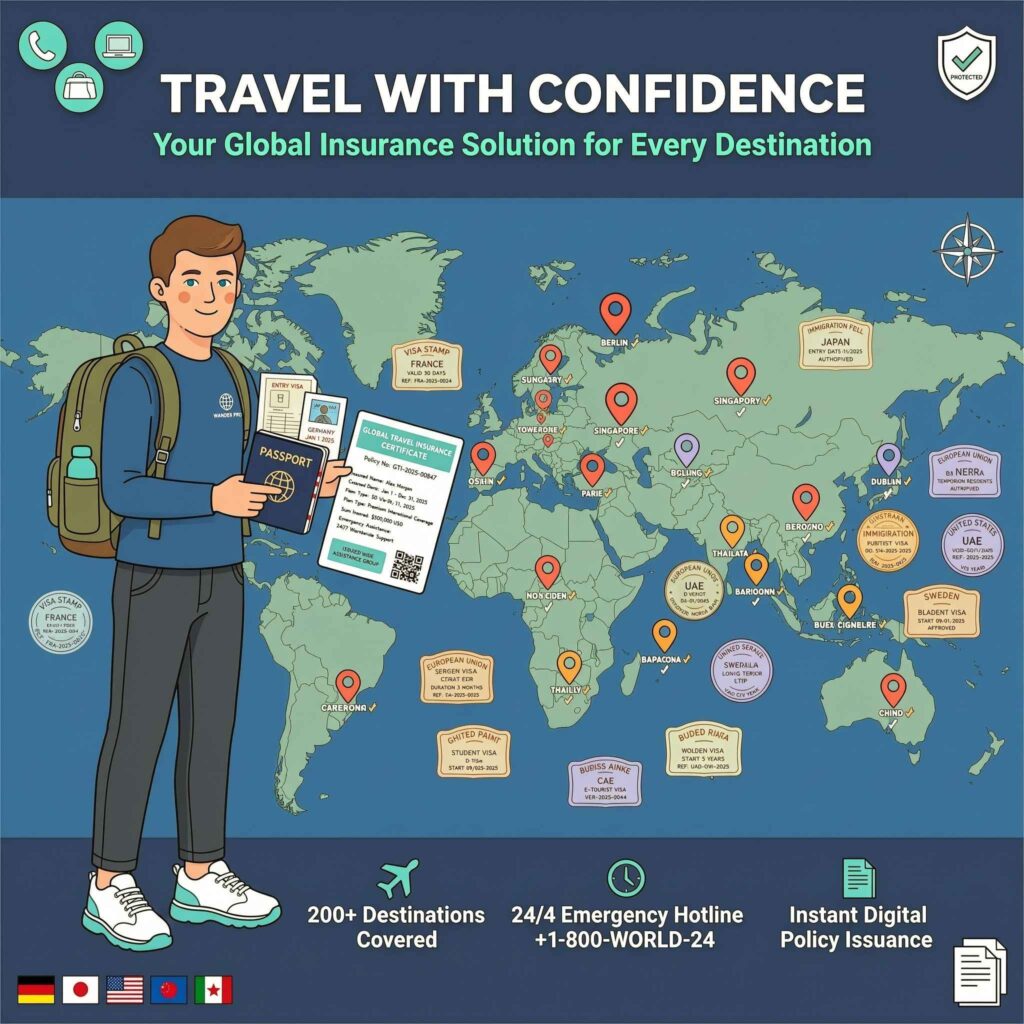
Three months ago, my friend Jake’s Portuguese D7 visa application was rejected. He had everything else perfect: proof of income, clean criminal record, rental agreement in Lisbon. The problem? His travel insurance didn’t meet Portugal’s minimum coverage requirements. He’d purchased a $50,000 policy when Portugal requires €30,000 (approximately $32,500), but his policy excluded repatriation coverage, which is mandatory. That rejection cost him three additional months of waiting and nearly $800 in reapplication fees.
This scenario plays out constantly in digital nomad communities. Insurance requirements represent one of the most confusing and frequently misunderstood aspects of securing nomad visas. Each country sets different minimums, accepts different provider types, and requires specific documentation that isn’t always obvious from visa application websites.
After helping dozens of nomads navigate these requirements and personally applying for visas in four countries, I’ve compiled this comprehensive guide to insurance requirements for the most popular digital nomad destinations. This information comes from official embassy sources, immigration attorneys, and real application experiences from 2025-2026.
why countries require specific insurance coverage
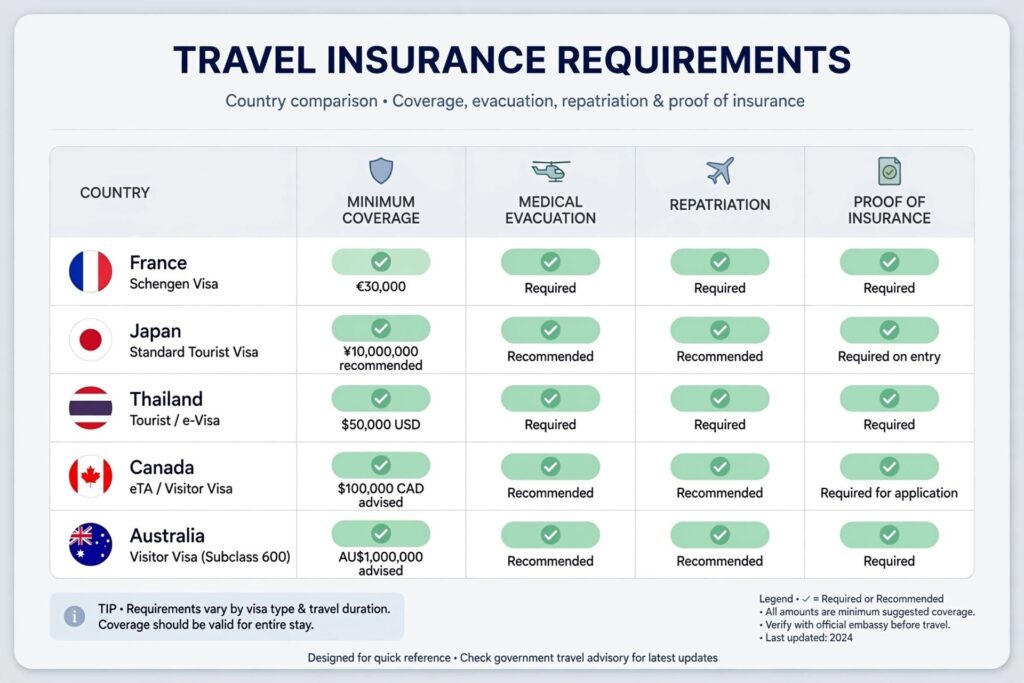
Before diving into country-specific requirements, it helps to understand why governments impose these rules. Countries offering digital nomad visas want to ensure foreign residents won’t burden their public healthcare systems or become stranded without resources during medical emergencies.
Insurance requirements serve as a financial safeguard. If you’re hospitalized for two weeks with dengue fever or break your leg hiking, the government wants confidence you can pay for treatment without accessing subsidized local healthcare meant for citizens and taxpayers.
Different countries emphasize different aspects. European nations typically require higher coverage minimums and specific inclusions like repatriation. Southeast Asian countries often accept lower minimums but require proof of worldwide coverage. Some destinations accept travel insurance while others demand international health insurance specifically.
Understanding these distinctions prevents expensive application mistakes.
european digital nomad visa requirements
portugal d7 and d8 visas
Portugal’s D7 passive income visa and newer D8 digital nomad visa both require comprehensive health insurance meeting specific criteria. The minimum coverage is €30,000 for medical expenses, hospitalization, and repatriation of remains.
Portugal accepts several insurance types. You can use Portuguese national health insurance (SNS) after obtaining residency, private Portuguese health insurance from companies like Médis or Advancecare, or international travel/health insurance from recognized providers. SafetyWing’s $250,000 coverage limit easily exceeds the €30,000 minimum and includes repatriation, making it acceptable for initial applications.
The documentation requirement is critical. You need an insurance certificate or policy document in English or Portuguese clearly stating coverage minimums, coverage territory (must include Portugal), policy dates, and your name exactly matching your passport. Some applicants have been asked to provide additional letters from insurance companies confirming the policy meets Portuguese legal requirements.
Portugal’s insurance must be valid for at least the first year of your residency period. You’ll need to maintain continuous coverage and provide proof when renewing your visa annually.
spain digital nomad visa
Spain’s digital nomad visa, introduced in 2023, requires private health insurance authorized to operate in Spain with “full coverage and no copayments.” This phrasing creates confusion because it technically requires either Spanish private insurance or international insurance that covers Spain without deductibles or copayments.
The minimum coverage amount is €30,000, matching Portugal’s requirement. However, Spain’s interpretation of “no copayments” technically excludes most travel insurance policies with deductibles. In practice, many applicants successfully use SafetyWing or similar providers by including a letter explaining that deductibles apply to reimbursement, not initial treatment access.
Spanish consulates have discretion in interpreting requirements, leading to inconsistent application experiences. The Madrid consulate reportedly accepts international travel insurance more readily than Barcelona or other locations. If possible, consider using actual Spanish health insurance from companies like Sanitas, Adeslas, or Asisa to eliminate any ambiguity.
Your insurance must cover the entire visa period, typically one year initially. Spain also requires insurance to be purchased before applying, with the policy start date no more than 90 days before your intended arrival date.
estonia digital nomad visa
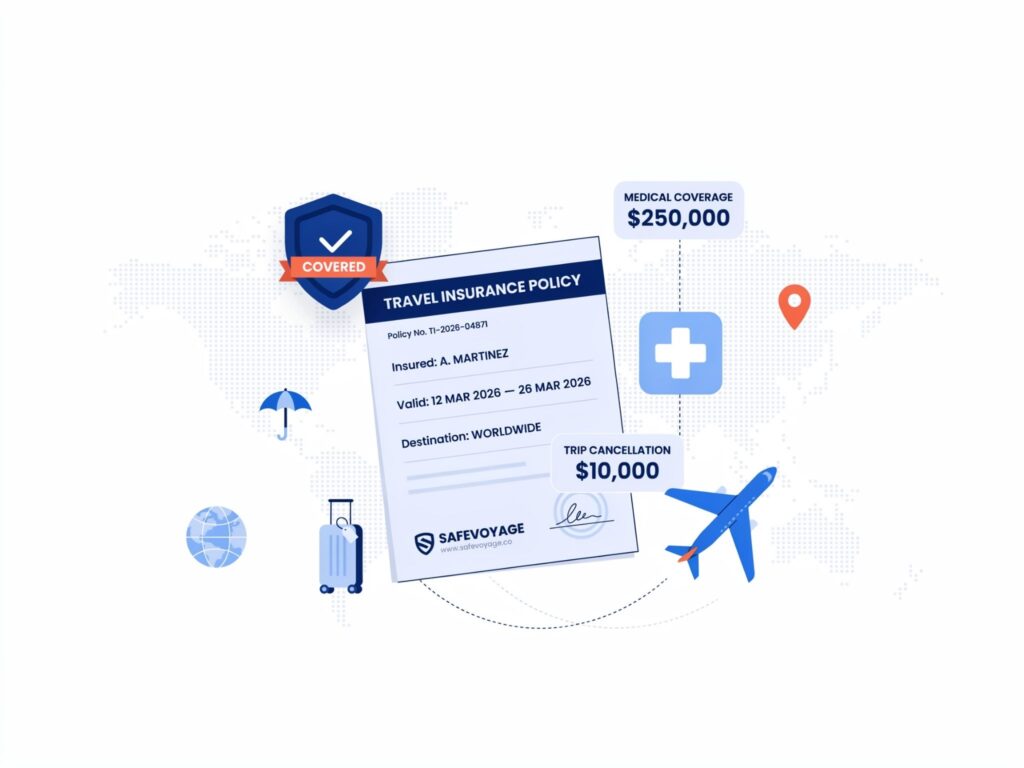
Estonia takes a simpler approach. The requirement is health insurance valid in Estonia covering the entire visa period (up to one year), with no specified minimum coverage amount mentioned in official documentation.
In practice, Estonian immigration accepts most international travel insurance policies including SafetyWing, World Nomads, or Genki (though Genki doesn’t cover if you plan any U.S. visits). The key is ensuring your policy explicitly covers Estonia and matches your visa dates.
Estonia’s application process is entirely online and highly efficient. Upload a PDF of your insurance policy or certificate showing coverage in Estonia, policy dates, and your personal information. Most applications process within 15-30 days if insurance documentation is clear.
Because Estonia doesn’t specify minimums, you can use lower-cost providers. However, I recommend at least €50,000 coverage since Estonian healthcare, while efficient, isn’t the cheapest in Europe.
croatia digital nomad visa
Croatia requires health insurance for the duration of your stay with minimum coverage of €30,000. The insurance must cover emergency medical treatment, hospitalization, and medical repatriation.
Croatia explicitly accepts travel insurance, making SafetyWing, World Nomads, and similar providers clearly eligible. The documentation requirement is straightforward: provide a copy of your insurance policy or certificate showing coverage amount, dates, and coverage territory including Croatia.
One important note about Croatia: if you’re applying for the one-year digital nomad residence permit rather than the short-stay visa, you’ll need to demonstrate insurance covering the full twelve months. Many travel insurance policies sold as “annual” coverage actually provide 365 days of coverage for trips under 90 days each. Ensure your policy covers continuous residence, not just multiple short trips.
Croatian consulates process applications relatively quickly, typically within 30 days. Clear insurance documentation prevents the most common cause of delays.
southeast asian nomad visa requirements
thailand long-term resident (ltr) visa
Thailand’s LTR visa program, launched in 2022, includes a category for remote workers called the “Work-from-Thailand Professional” visa. Insurance requirements depend on your age.
If you’re under 50, you must have health insurance with minimum coverage of $50,000. The insurance must cover outpatient and inpatient treatment in Thailand for the entire visa period (up to five years, though typically issued for five years but reviewed annually for the first few years).
If you’re 50 or older, Thailand requires health insurance with minimum coverage of $100,000, effectively doubling the requirement for older applicants.
Thailand accepts international health insurance from recognized providers. SafetyWing’s $250,000 coverage exceeds both minimums. However, some applicants report that Thai immigration specifically asks whether the insurance covers treatment in Thailand, so ensure your policy documentation explicitly mentions Thailand or “worldwide coverage” that clearly includes Thailand.
The documentation required includes a certificate or policy document showing coverage amount, policy dates, covered territories, and confirmation that it covers medical treatment in Thailand. Some applicants have been asked to provide a letter from the insurance company on company letterhead confirming these details.
bali indonesia
Indonesia doesn’t offer an official digital nomad visa yet, though the government has announced plans for a five-year nomad visa launching sometime in 2026. Currently, most digital nomads use B211A tourist visas or social-cultural visas, which have different insurance requirements.
For the B211A visa (60 days extendable to 180 days), Indonesia requires travel insurance covering the visa period with minimum coverage of $25,000 for medical expenses and $25,000 for COVID-19 treatment specifically. While the COVID-specific requirement has relaxed since 2024, many consulates still expect to see it mentioned.
The insurance must cover Indonesia specifically and match your visa dates exactly. Indonesian consulates are particularly strict about date matching. If your visa starts March 15, your insurance cannot start March 16.
Most international travel insurance providers work for Indonesia’s requirements since the minimums are relatively low. SafetyWing, World Nomads, and Genki all exceed the $25,000 minimum. The key is obtaining clear documentation in English showing Indonesia in the covered territories.
When Indonesia launches its official digital nomad visa, insurance requirements will likely increase to match Thailand’s $50,000 minimum or potentially higher. Monitor official announcements if planning to use the new visa category.
latin american digital nomad requirements
mexico temporary resident visa
Mexico’s temporary resident visa, popular among digital nomads, doesn’t explicitly require health insurance as part of the application. However, Mexican consulates have discretion to request proof of insurance as supplementary documentation demonstrating you can support yourself without becoming a public charge.
While not mandatory, I strongly recommend obtaining insurance and including documentation with your application. Mexican immigration officers occasionally ask for insurance proof at the border even if your visa was approved without it. Having documentation prevents potential entry complications.
There’s no specified minimum coverage amount. Most nomads use SafetyWing or travel insurance with at least $50,000 coverage. The key is having something to show if asked, rather than meeting specific requirements.
Mexico’s temporary resident visa allows stays up to four years, making it one of the longest initial visa periods available. Plan for insurance covering at least your first year, then maintain continuous coverage throughout your stay.
costa rica digital nomad visa
Costa Rica’s Rentista visa program, adapted for digital nomads, requires health insurance that covers medical expenses in Costa Rica. There’s no specified minimum coverage amount in the official requirements.
The insurance must be issued by a company authorized to operate in Costa Rica, which technically excludes most international travel insurance. However, in practice, many applicants successfully use international providers by submitting policy documentation showing Costa Rica coverage.
The safest approach is using Costa Rican insurance companies like INS (Instituto Nacional de Seguros) or Sagicor. These policies typically cost $100-200 monthly and provide comprehensive coverage within Costa Rica, though they don’t cover other countries if you travel regionally.
Some nomads maintain dual coverage: local Costa Rican insurance satisfying visa requirements plus international travel insurance covering them outside Costa Rica. This costs more but provides complete protection.
colombia digital nomad visa
Colombia doesn’t yet offer a specific digital nomad visa, but the government announced plans to introduce one in 2026. Currently, nomads use tourist visas (no insurance required) or the M-9 work visa (which requires employer sponsorship, not applicable for independent remote workers).
When Colombia launches its digital nomad visa, insurance requirements will likely follow regional patterns of $30,000-50,000 minimum coverage. Monitor official announcements from the Colombian Ministry of Foreign Affairs for confirmed requirements.
middle east and africa emerging destinations
united arab emirates (dubai) virtual work residence
Dubai’s Virtual Working Program requires health insurance valid in the UAE. There’s no specified minimum coverage amount, but the insurance must cover medical treatment in UAE facilities.
The challenge with UAE requirements is that most international travel insurance policies don’t cover routine care, which UAE immigration sometimes questions. Some applicants report being asked about coverage for doctor visits and prescriptions, not just emergencies.
The most straightforward approach is purchasing UAE-based health insurance from providers like Dubai Insurance Company or Orient Insurance. These policies typically cost $150-300 monthly but provide comprehensive local coverage that clearly satisfies visa requirements.
Alternatively, some international insurers like Cigna Global explicitly cover the UAE for routine and emergency care. These policies satisfy requirements while also covering you for travel outside the UAE.
Your insurance must remain valid throughout your visa period (one year). UAE immigration conducts periodic compliance checks and can revoke visas if insurance lapses.
mauritius premium travel visa
Mauritius offers a Premium Travel Visa allowing remote workers to stay up to one year. The insurance requirement is straightforward: travel and health insurance with worldwide coverage (including Mauritius) for the visa duration.
There’s no specified minimum coverage amount. Most applicants use standard international travel insurance like SafetyWing or World Nomads. The key documentation requirement is a policy certificate clearly showing Mauritius in covered territories and dates matching your visa period.
Mauritius processes applications relatively quickly, typically within two weeks. Clear insurance documentation prevents most delays.
common insurance documentation mistakes
After reviewing dozens of rejected visa applications, several documentation mistakes appear repeatedly:
Missing repatriation coverage: Many European countries require repatriation of remains explicitly mentioned in policy documents. Standard travel insurance includes this, but if your certificate doesn’t specifically state “repatriation” or “medical evacuation,” consider requesting a detailed policy document or letter from your insurer confirming inclusion.
Date mismatches: Your insurance dates must match or exceed your visa period exactly. If applying for a one-year visa starting June 1, 2026, your insurance cannot start June 2 or end May 30, 2027. These mismatches cause automatic rejections.
Wrong policy type: Some countries require “health insurance” rather than “travel insurance.” While the distinction is sometimes semantic, immigration officers may reject travel insurance policies for visas explicitly requiring health insurance. When in doubt, use comprehensive international health insurance rather than emergency-only travel insurance.
Insufficient coverage amounts: If a country requires €30,000 minimum and your policy provides $30,000, that’s potentially insufficient depending on exchange rates. Always exceed minimums by 10-15% to account for currency fluctuations between application and approval.
Missing territory confirmation: Your policy must explicitly cover the visa country. “Worldwide coverage” is sometimes questioned if the specific country isn’t named. Request a certificate or letter specifically mentioning the destination country by name.
Illegible documents: Blurry scans, foreign language documents without translations, or incomplete pages cause rejections. Provide crystal-clear, complete documentation in English or the destination country’s official language.
insurance providers that work across multiple countries
Rather than purchasing different insurance for each country, most digital nomads use one international provider that satisfies requirements across destinations.
SafetyWing works for most digital nomad visas because it provides $250,000 coverage including repatriation, covers 185 countries, and costs only $56 monthly for under-40 travelers. It satisfies requirements for Portugal, Spain (with potential consulate discretion), Estonia, Croatia, Thailand, Indonesia, and Mauritius. The main limitation is Spain’s “no copayment” interpretation, though many applicants succeed despite the $250 deductible.
World Nomads satisfies requirements for countries accepting travel insurance and provides excellent documentation with clear coverage amounts and territories. The higher cost ($80-150 monthly) is offset by comprehensive documentation that consulates readily accept.
Genki works well for European destinations, covering most European countries with zero deductible at €39.90 monthly. The limitation is no U.S. coverage, which doesn’t matter for most European visa applications but becomes an issue if you’re American visiting home.
Cigna Global and IMG Global provide comprehensive international health insurance exceeding all digital nomad visa requirements. The $200-400 monthly cost is substantial but eliminates any ambiguity about coverage type or amounts. These providers also offer direct billing at international hospitals, avoiding reimbursement delays.
tips for successful insurance documentation
After helping multiple nomads through visa applications, these strategies consistently prevent insurance-related complications:
Apply for insurance first: Don’t start your visa application until you have insurance documentation in hand. This ensures your policy dates align properly with intended travel dates.
Request detailed certificates: Standard insurance cards often lack sufficient detail for visa applications. Request a formal certificate or policy document showing coverage amounts, territories, policy dates, repatriation inclusion, and your personal details matching your passport exactly.
Get provider letters: For countries with ambiguous requirements, request a letter from your insurance provider on company letterhead confirming the policy meets specific visa requirements. This demonstrates due diligence to immigration officers.
Keep digital and physical copies: Immigration can request insurance proof at the border even with an approved visa. Maintain copies in your email, cloud storage, and phone, plus a printed copy in your passport.
Set renewal reminders: Visa duration often exceeds standard policy terms. If your insurance renews every 28 days (like SafetyWing), ensure continuous coverage throughout your entire visa period with reminders before each renewal to prevent accidental lapses.
Confirm acceptance before applying: When in doubt, email the specific consulate processing your application with your insurance provider name and ask if it’s acceptable. Many consulates provide confirmation within a few days, eliminating uncertainty.
planning for long-term nomad life

Digital nomad visas typically last 1-2 years initially with renewal options. Planning insurance coverage for this extended period requires thinking beyond your first visa application.
Budget for insurance as a fixed monthly expense just like accommodation or food. For most nomads under 40, this means $50-80 monthly. Factor this into your location-independent income requirements.
Consider maintaining the same insurance provider across multiple visa applications. Switching providers between visas creates documentation complications and potential coverage gaps. Continuous coverage with one provider simplifies renewals and demonstrates stable insurance history.
Monitor requirement changes in your destination countries. Visa programs sometimes update insurance minimums or acceptable provider types. Join digital nomad communities specific to your destinations where members share real-time application experiences and requirement updates.
As you age or your health needs change, reassess whether emergency-only travel insurance still makes sense or whether comprehensive international health insurance provides better value. The peace of mind from knowing routine care, prescriptions, and pre-existing conditions are covered might justify higher premiums.
Meeting insurance requirements is one of the easiest parts of digital nomad visa applications once you understand what each country actually needs. The hard part is choosing the right insurance type and coverage level for your situation, which is why understanding the real differences between travel insurance and health insurance for digital nomads helps you make informed decisions that satisfy both visa requirements and your actual healthcare needs while living abroad.