
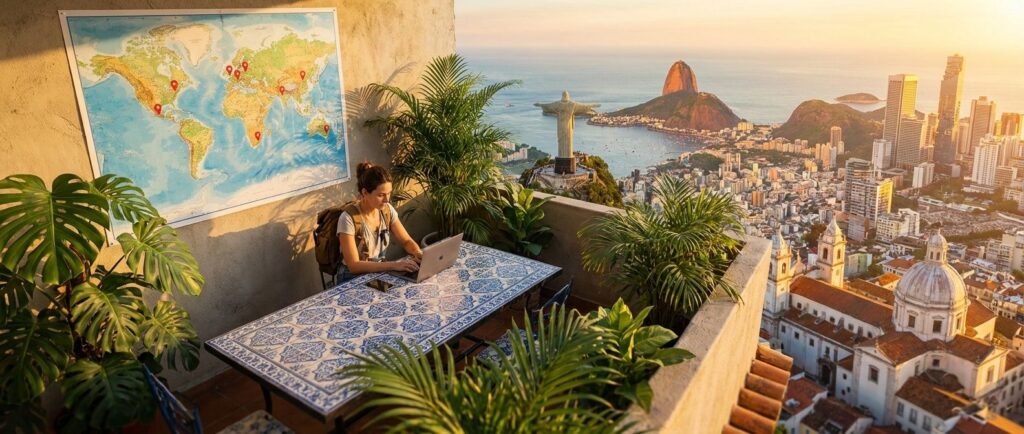
Choosing where to stay remains one of the most critical decisions for digital nomads. A city shapes productivity, social connections, and financial health. Some destinations stand out for affordable housing, reliable internet, and welcoming communities. Others attract nomads with culture, cuisine, or access to nature. The landscape shifts every year as new hubs emerge and established favorites evolve.

In 2026, the best places for digital nomads reflect both traditional powerhouses and rising destinations. Economic shifts, new visa programs, and changing housing markets have reshaped the nomad map. To put these destinations into context, the complete guide on digital nomad accommodation explains how housing choices shape the overall nomadic lifestyle.
What Makes a City Attractive for Digital Nomads
Not every city suits remote workers. The factors that separate viable destinations from exceptional ones include:
Internet quality: Reliable, high-speed connectivity is non-negotiable for remote work. Speeds above 50 Mbps and stable connections enable video calls, file transfers, and cloud-based collaboration.
Housing costs: Accommodation typically consumes 30-50% of a nomad’s budget. Cities offering diverse options from co-living spaces to private rentals provide flexibility for different budgets and preferences.
Community: Access to other nomads or engaged locals prevents isolation. Coworking spaces, meetup groups, and established expat networks create social infrastructure.
Safety: Personal security and political stability enable longer stays. Cities with low crime rates and reliable emergency services reduce stress and risk.
Visa options: Digital nomad visas, extended tourist stays, or straightforward visa runs determine legal feasibility. Countries offering 6-12 month stays without complex requirements attract more nomads.
Lifestyle balance: Quality food, nature access, cultural activities, and wellness options contribute to sustainable long-term living. Cities offering this balance retain nomads beyond initial trial periods.
When these elements align consistently, a city transitions from temporary stop to established hub.
Top Destinations for 2026
Lisbon, Portugal
Lisbon maintains its position as Europe’s strongest nomad hub despite rising costs. The city combines historic architecture with a modern digital ecosystem. Housing options range from co-living houses in Alfama to private rentals in Príncipe Real. The local community hosts regular meetups, and the international airport provides easy connections across Europe and beyond.
Internet: Excellent infrastructure with speeds exceeding 100 Mbps in most areas.
Average rent: $1,400–1,800 for a one-bedroom apartment in central neighborhoods. Outlying areas like Almada or Cascais offer more affordable options at $1,000–1,300.
Highlights: Year-round mild weather, sophisticated food scene, safe environment, active tech community, proximity to beaches.
Downsides: Housing costs continue rising due to sustained popularity. Competition for quality apartments requires advance booking or local contacts.
Bali, Indonesia
Bali remains Asia’s flagship nomad destination. Canggu attracts the coworking crowd with beach access and social scenes, while Ubud appeals to those seeking wellness and nature. The island offers extensive villa options and established co-living networks. The Indonesian government’s digital nomad visa program, launched in phases through 2026-2026, now offers extended stays up to 180 days with straightforward renewal options.
Internet: Reliable in main hubs with fiber reaching 100+ Mbps. Quality decreases in remote villages or during peak tourist season.
Average rent: $750–1,100 for private villas or apartments in Canggu and Seminyak. Ubud runs slightly lower at $600–900.
Highlights: Wellness culture with yoga studios and healthy cafes, strong nomad community, tropical climate, affordable lifestyle services (massages, personal training, housekeeping).
Downsides: Crowding in peak season (July-August, December-January), visa runs required for stays beyond 180 days, traffic congestion in Canggu has worsened.
Medellín, Colombia
The “City of Eternal Spring” has solidified its reputation as Latin America’s premier nomad hub. Medellín balances low costs with growing infrastructure. Neighborhoods like Poblado and Laureles host most nomads, offering walkable streets, cafes, and coworking spaces. The city’s transformation from its troubled past continues, though neighborhood safety still varies.
Internet: Excellent reliability with speeds of 100+ Mbps standard in furnished rentals.
Average rent: $600–950 for modern apartments in Poblado. Laureles and Envigado offer similar quality at $450–700.
Highlights: Perfect year-round weather (22-28°C), affordable high-quality food, expanding tech scene, friendly locals, strong coworking culture.
Downsides: Safety varies significantly by neighborhood. Areas outside Poblado, Laureles, and Envigado require local knowledge. Language barrier for non-Spanish speakers.
Mexico City, Mexico
Mexico City pulses with energy, culture, and endless discovery. The massive metropolis attracts nomads to specific neighborhoods rather than the city as a whole. Roma Norte and Condesa form the nomad epicenter, offering walkable streets, cafes, parks, and coworking spaces. The city’s cultural depth—museums, galleries, theaters, and live music—provides constant stimulation.
Internet: Strong and consistent in central neighborhoods with fiber connections reaching 100+ Mbps.
Average rent: $700–1,200 for one-bedroom apartments in Roma or Condesa. Prices vary widely by building quality and exact location.
Highlights: World-class food scene, deep cultural offerings, large nomad community, excellent domestic and international flight connections, vibrant nightlife.
Downsides: Noise and traffic can overwhelm. Altitude (2,240m) affects some people initially. Air quality issues during winter months. Safety requires neighborhood awareness.
Dakhla, Morocco
Dakhla represents an alternative path smaller, quieter, and focused on nature. This coastal city in southern Morocco attracts kitesurfers and those seeking focus over social scenes. While infrastructure lags behind major hubs, improvements in internet and housing continue. The city offers something increasingly rare: space, calm, and affordable ocean access.
Internet: Improving steadily with reliable 4G/5G coverage and fiber reaching central areas. Speeds of 20-50 Mbps now standard.
Average rent: $350–600 for apartments, with some furnished options including utilities.
Highlights: World-class kitesurfing, uncrowded beaches, low costs, sunny climate, growing expat community, seafood-focused cuisine.
Downsides: Smaller community means limited networking. Minimal nightlife or cultural activities. Remote location requires flights through Casablanca or Agadir.
Budapest, Hungary
Budapest balances Old World charm with modern digital infrastructure. The Hungarian capital offers thermal baths, historic architecture, and a central European location. Coworking spaces dot both Pest and Buda sides, and the nomad community has grown significantly since 2023.
Internet: Excellent across the city with speeds exceeding 170 Mbps standard.
Average rent: $700–1,100 for one-bedroom apartments in central districts (V, VI, VII). Outlying districts offer similar quality at $550–850.
Highlights: Central European location enables weekend travel, rich history and culture, thermal bath culture, strong cafe scene, affordable compared to Western Europe.
Downsides: Cold winters (November-March) with temperatures often below freezing. Political climate may concern some nomads. Language barrier outside tourist areas.
Chiang Mai, Thailand
Chiang Mai pioneered the digital nomad movement and maintains relevance through affordability and community. While Bali captured attention, Chiang Mai continues attracting nomads who prefer smaller-city pace and rock-bottom costs. Thailand’s new five-year digital nomad visa, active since late 2026, allows 180-day stays with straightforward extensions.
Internet: Reliable and fast across the city, with coworking spaces and cafes offering consistent 50-100 Mbps connections.
Average rent: $350–600 for modern condos with pools and gyms. Older apartments run $250–400.
Highlights: Extremely affordable, large established nomad community, excellent coworking spaces, calm pace, rich cultural experiences, outstanding food.
Downsides: Air pollution during burning season (February-April) creates health concerns. Heat and humidity (March-June) can be intense. Growing tourist crowds affecting previously quiet areas.
Cost Comparison Across Top Cities
| City | Avg. Monthly Rent (USD) | Internet Quality | Community Size | Lifestyle Score | Total Monthly Budget |
|---|---|---|---|---|---|
| Lisbon | 1,400–1,800 | Excellent (100+ Mbps) | Large | High | 2,200–2,800 |
| Bali | 750–1,100 | Good (50-100 Mbps) | Large | High | 1,500–2,200 |
| Medellín | 600–950 | Excellent (100+ Mbps) | Large | High | 1,400–2,000 |
| Mexico City | 700–1,200 | Excellent (100+ Mbps) | Large | High | 1,600–2,400 |
| Dakhla | 350–600 | Good (20-50 Mbps) | Small | Medium+ | 900–1,400 |
| Budapest | 700–1,100 | Excellent (170+ Mbps) | Medium | High | 1,400–2,000 |
| Chiang Mai | 350–600 | Excellent (50-100 Mbps) | Large | High | 1,100–1,600 |
This comparison reveals clear patterns. European cities offer superior infrastructure but command premium prices. Latin American destinations balance moderate costs with excellent internet and growing communities. Southeast Asian cities remain most affordable while maintaining quality infrastructure. Dakhla provides the lowest costs but with trade-offs in community size and infrastructure maturity.
The “Total Monthly Budget” includes rent, food, coworking, local transportation, and modest entertainment—representing a comfortable middle-ground lifestyle rather than budget or luxury extremes.
Visa-Friendly Destinations
Visa policies increasingly determine destination viability. Several countries now offer pathways designed specifically for digital nomads:
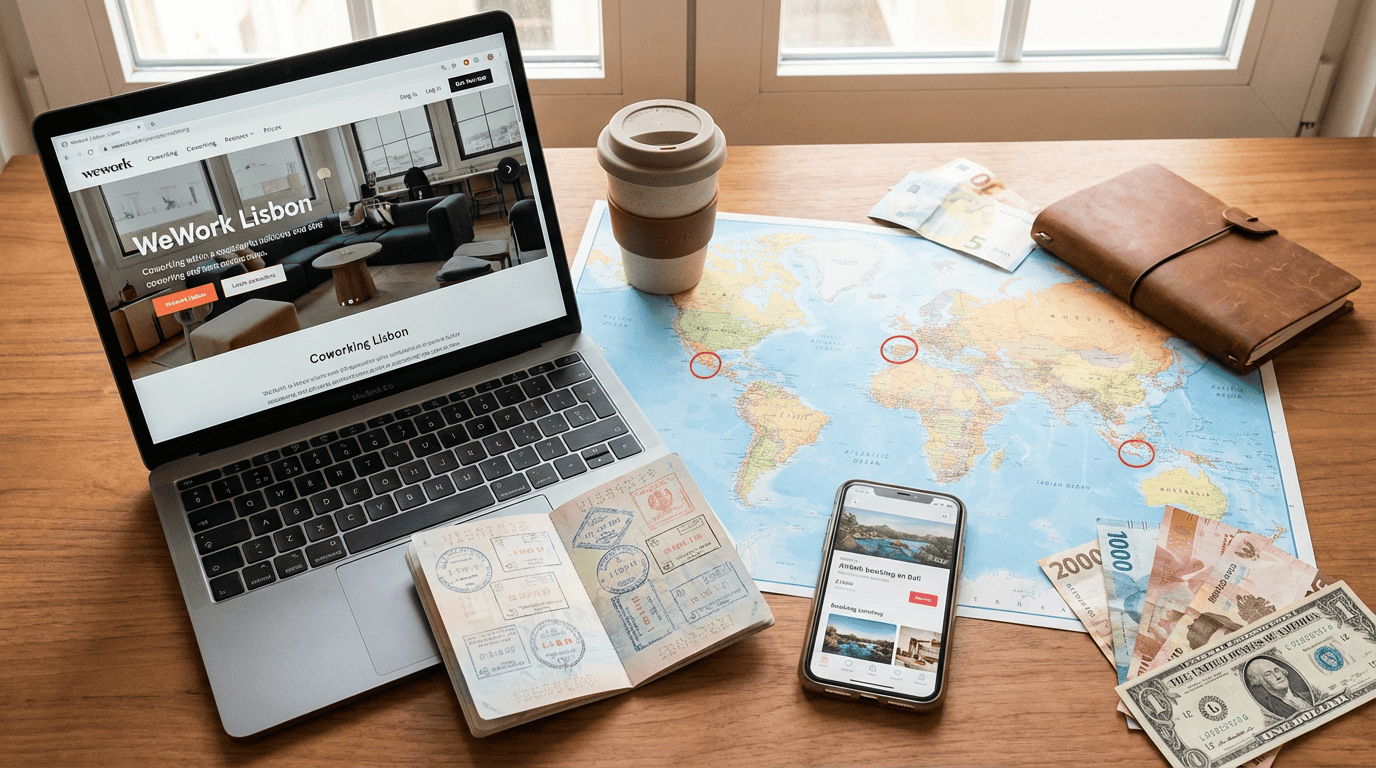
Portugal: The D7 visa enables long-term residence for remote workers with proof of income. Requirements include demonstrating minimum monthly income (approximately €820) and securing accommodation. The visa provides a pathway to permanent residence.
Thailand: The new five-year digital nomad visa launched in late 2026 allows 180-day stays with extensions. Requirements include proof of remote employment or business ownership and minimum income of approximately $80,000 annually or $40,000 with certain qualifications.
Colombia: The digital nomad visa (Visa V Digital Nómada) launched in 2022 and refined through 2024-2026 permits two-year stays. Requirements include proof of remote work and minimum monthly income of three times the Colombian minimum wage (approximately $750 USD).
Mexico: Temporary residence visas allow stays up to four years with annual renewals. The process requires demonstrating economic solvency through bank statements or proof of monthly income exceeding approximately $2,700.
Indonesia: Digital nomad visa plans continue rolling out through 2026, currently offering 180-day stays with extensions possible. The program targets high-income remote workers and requires proof of employment or business ownership.
Hungary: The White Card program enables digital nomads to stay up to two years. Requirements include proof of remote work, health insurance, and accommodation.
These visa options eliminate constant border runs and enable genuine long-term planning. The shift from tourist visas to dedicated nomad visas reflects governments recognizing remote workers as an economic opportunity rather than a regulatory challenge.
Lifestyle Balance: Beyond Work and Cost
Great nomad cities provide more than internet and affordable rent. Long-term satisfaction requires balance across multiple dimensions:
Work environment: Beyond fast home internet, quality coworking spaces provide structure, community, and professional atmosphere. Cities like Lisbon, Chiang Mai, and Medellín offer dozens of coworking options from large chains (Selina, WeWork) to independent spaces with distinct cultures.
Social infrastructure: Regular meetups, events, and active online communities (Facebook groups, WhatsApp chats, Discord servers) combat isolation. Cities with established nomad populations maintain this social infrastructure organically.
Physical well-being: Access to gyms, yoga studios, hiking trails, beaches, or sports facilities supports health. Bali excels with wellness culture. Dakhla offers kitesurfing and ocean sports. Budapest provides thermal baths and cycling infrastructure.
Mental stimulation: Museums, galleries, live music, theater, and cultural events prevent stagnation. Mexico City leads in cultural depth. Lisbon offers strong art scenes. Chiang Mai provides temples and traditional crafts.
Nature access: Proximity to beaches, mountains, forests, or parks enables weekend escapes and mental resets. Cities offering quick nature access (Bali, Dakhla, Lisbon) score high on long-term satisfaction.
Lisbon exemplifies comprehensive balance: excellent work infrastructure, large community, rich culture, beach access, and safety. Bali trades some infrastructure consistency for superior wellness and nature. Medellín offers the best cost-to-quality ratio with good balance across dimensions. Each city’s unique combination attracts different nomad personalities and priorities.
Emerging Destinations to Watch in 2026
Several cities haven’t yet reached major hub status but show strong growth trajectories:
Da Nang, Vietnam: Coastal city experiencing 328% growth in nomad interest according to recent data. Offers beach access, affordable living ($800-1,400 monthly), and improving coworking infrastructure. Vietnam’s visa policies remain more restrictive than Thailand, limiting growth potential until reforms.
Tbilisi, Georgia: Extremely affordable ($800-1,500 monthly) with a friendly one-year nomad visa program. The city offers unique architecture, wine culture, and a growing tech scene. Cold winters and limited international flight connections constrain appeal.
Cape Town, South Africa: Stunning natural beauty and improving nomad infrastructure. The city attracts adventure-focused nomads with hiking, surfing, and outdoor activities. Safety concerns and visa complexities limit growth. Loadshedding (power outages) affects work reliability.
Buenos Aires, Argentina: Cultural richness and low costs due to favorable exchange rates. The city offers European architecture, world-class steak and wine, and vibrant nightlife. Economic instability and complex bureaucracy challenge long-term stays.
Tallinn, Estonia: Digital-forward city with e-Residency program and digital nomad visa. Cold climate and higher costs ($1,500-2,200 monthly) limit mass appeal but attract tech-focused nomads seeking European base with digital innovation.
These cities may become major hubs if they address current limitations. Da Nang needs visa reform. Tbilisi requires better international connections. Cape Town needs infrastructure stability. Buenos Aires needs economic predictability. Each offers something unique for nomads willing to pioneer less-established destinations.
Practical Tips When Choosing Your City
Test before committing: Book 2-4 weeks initially. Stay in different neighborhoods. Test internet at various times. Attend meetups. Assess whether the city matches expectations before signing long-term leases.
Calculate total costs: Rent represents only one component. Factor in food, coworking, transportation, visa costs, health insurance, and entertainment. A city with $600 rent but expensive food and transportation may cost more than one with $900 rent but cheap everything else.
Consider seasonal variation: Many cities have distinct seasons affecting cost, weather, and crowds. Bali peaks July-August and December-January. Lisbon fills June-September. Mexico City enjoys perfect weather October-May. Chiang Mai suffers air pollution February-April. Time your arrival strategically.
Join online communities first: Facebook groups like “Digital Nomads [City Name]” provide current information on housing, visas, safety, and events. These groups often offer apartment leads, coworking recommendations, and arrival advice.
Align with your priorities: Introverts may prefer Chiang Mai or Dakhla over Mexico City. Party enthusiasts thrive in Bali or Lisbon. Career-focused nomads benefit from cities with strong professional networks. Nature lovers need ocean or mountain access. Identify your non-negotiables before choosing.
Plan for visa complexity: Research visa requirements months before arrival. Some visas require documents from home countries. Others need advance appointments. Factor processing time and costs into planning.
Balance novelty with stability: Constantly moving prevents building depth. Most experienced nomads recommend 2-3 month minimum stays to truly experience a city, build relationships, and establish routines.
The Evolving Nomad Landscape
The digital nomad movement continues maturing. What began as budget travelers working from coffee shops has evolved into a recognized lifestyle with dedicated infrastructure. Governments now compete for nomads through visa programs. Cities build coworking spaces and coliving projects specifically for remote workers. The community has segmented into different types: budget nomads, luxury nomads, nomad families, and “hybrid nomads” who maintain home bases while traveling seasonally.
Tax compliance has become more complex as governments close loopholes. Nomads increasingly need proper residency planning, tax advice, and legal structures for their remote work. The days of perpetual tourist status are ending as countries implement stricter enforcement.
The best cities for 2026 recognize these shifts. They offer not just cheap rent and good internet, but complete ecosystems: legal clarity through nomad visas, community through established networks, and lifestyle balance through diverse amenities.
Final Thoughts
The best places for digital nomads in 2026 include proven hubs like Lisbon, Bali, and Chiang Mai alongside growing alternatives like Medellín, Mexico City, and Budapest. Emerging options like Dakhla offer different trade-offs for those seeking less crowded paths. Each destination provides distinct combinations of cost, infrastructure, community, and lifestyle.
The choice depends on individual priorities: budget constraints, climate preferences, community needs, and work requirements. No single “best” city exists only the best city for your specific circumstances and season of life.
For those focusing on keeping accommodation costs manageable while maintaining quality, strategies apply across all these destinations. The guide on cheap accommodation for digital nomads details approaches that work whether you choose Lisbon or Chiang Mai, from negotiating long-term rates to finding hidden local deals that bypass tourist pricing.